New
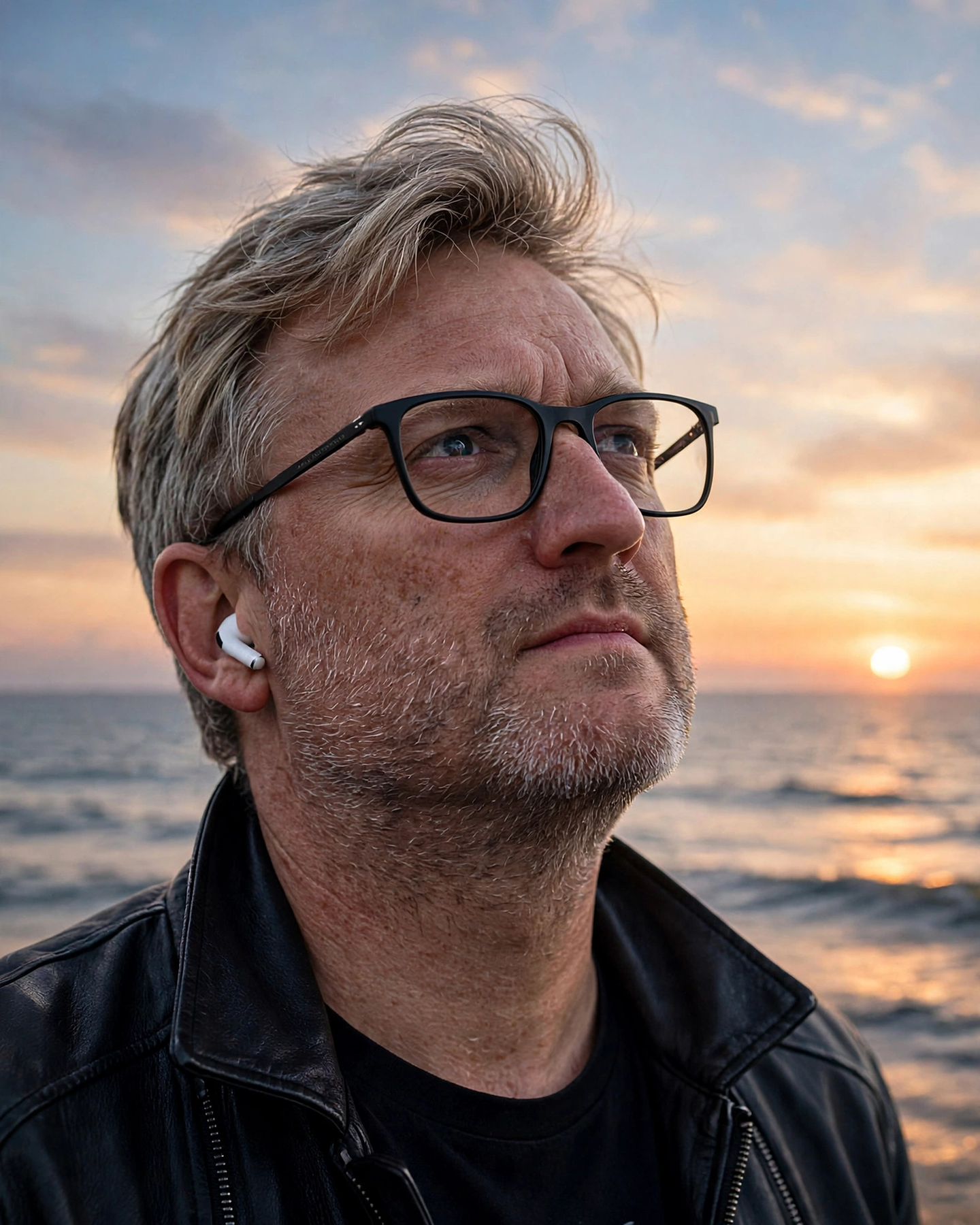
Musician & Programmer. Heart in electronic music & code. Luleå soul, Solna home.
Released by Elmén Records
New

New
The player loads from SoundCloud only when you click.
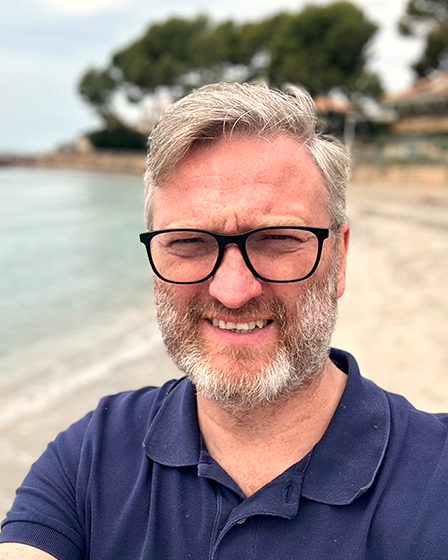
Anders Elmén was born in Luleå in April 1973 and has made music since his teens, without any formal musical training.
For him, music has never been about what the chords are called, but about how they sound and above all how they feel. Whether a chord is called sus4 or Am7 matters less than what happens when the next one follows it.
Above all, it is the interplay of minor and major that fascinates him: how a melody can feel melancholy and still carry joy and energy. That contrast has followed him from the first compositions on the Commodore 64 to the electronic productions of today.
The first song he remembers falling for was Elvis Presley’s Always on My Mind, which he got to listen to in his dad’s Volvo 142.
Then came pop and the New Romantics: Duran Duran, above all the live album Arena, which he played the drums to in the basement, to the despair of the neighbours. Kim Wilde’s Teases & Dares, David Bowie’s Let’s Dance and Madness have also left deep marks on his music.
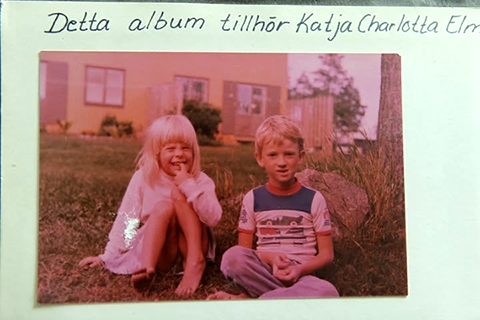
He borrowed the drums from his sister’s husband, Milan Polak, who also became his mentor. At Eva and Milan’s home he was allowed to play the piano and the keyboards they had there.
Milan is a trumpeter and studied at the conservatory in Žilina, Slovakia, from 1963 to 1969. After ten years as a musician in symphony orchestras, military bands and pop bands, he became a music teacher at the municipal arts school in Luleå (Kulturskolan) in 1979, teaching brass, percussion and orchestra until he retired.
He played the trumpet in Norrbottens Kammarorkester when Folke Isaksson’s Från mörker till ljus was performed in Gammelstads kyrka in June 1992, and when Andreas Söderberg’s Christmas oratorio Gud blev människa was given in Nederluleå kyrka in 2014, the review singled him out for praise.
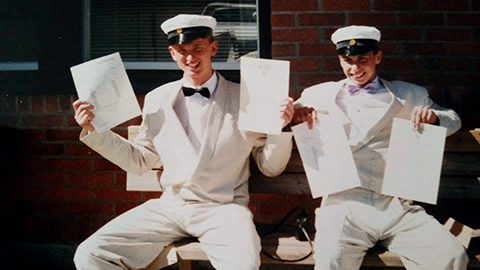
Just as important were Modern Talking and the rest of Italo disco, and what was played at the nightclubs in central Luleå that he went to from the age of 18: Cleo, down in the hotel garage, and Pimpinella in the middle of Storgatan, the town’s place to be in the 90s.
Anders has electronic music in his blood. From the synth-pop of the eighties and the eurodance of the nineties to today’s trance, synthwave and nu-disco, electronic sounds have always had a special place in his musical world.
But the inspiration has never stopped at one genre. Rock, pop, indie, R&B and even metal all have something to offer. For Anders, it is not the genre that decides whether a song is good, but the melodies, the harmonies and how everything works together.
Even as a young man he was as interested in how music was made as in the songs themselves. He would read about which instruments had been used on a recording and then try to work out how they shaped the sound. Synths like the Yamaha DX7 became almost legendary – instruments he read about, listened for and dreamed of exploring himself.
One of his great sources of inspiration is the songwriter and producer Desmond Child. Robin Beck’s album Trouble or Nothin’ was played constantly at home, as were productions and songs Child had a hand in, among them with Alice Cooper and Bonnie Tyler.
It was not only about listening to good music. Anders could play the same song over and over to understand what made it so good: how the chorus was built, why a chord change worked, or how a production could create so much energy. Sometimes on repeat until his brain went almost numb.
That curiosity is still there today. Anders is as happy to take on a rock song as a trance production. The tools and the genres may change, but what drives him on is still the hunt for the melody that refuses to leave your head.
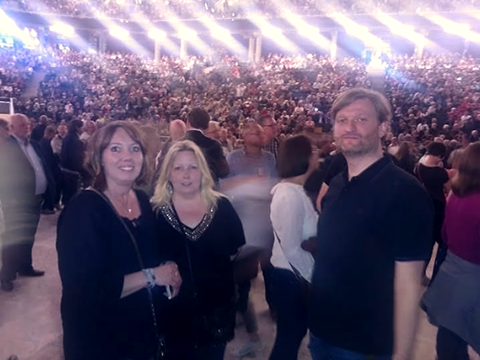
Sources: Från mörker till ljus (the programme, 1992) · Review of Gud blev människa (2014) · Från Cleo till Soulution (Vårt Luleå)
His own music began in Luleå, on the Commodore 64. He took the name Moon from S-Moon, the machine-code monitor in one of his cartridges.
He was a member of Federation Beyond Intelligence and of the demo group Phenomena, where, under the name D400, he made the code and music for Compton!, released at the Phenomena & Censor Party in Arboga in January 1990.
There were no streaming services then, no social media and no YouTube. The music was spread by swappers: young enthusiasts around the world who copied floppy disks and sent them to each other by ordinary post. A floppy held only a fraction of what a USB stick holds today. The swappers had large networks of contacts and were the demo scene’s own distribution network – a bit like file sharing and social media today, but with stamps, envelopes and pen pals. That is how a tune Anders had made in his boyhood room in Luleå could end up in Germany, the USA or Israel without his knowing it.
He never really understood that anyone was listening. Then one day a letter came, on paper, from a demo group in Israel: they had heard his music and wondered whether he would write a tune for their next demo. Someone in Israel knew who Moon was. He never sent one, and he cannot quite remember why; looking back, he thinks it is a bit of a shame.
Almost forty years later he still finds it hard to grasp that people on the other side of the globe listen to his music. “The difference, I suppose, is that these days there’s a notification on SoundCloud instead of a letter in the letterbox.”
In October 1989 he joined the Swedish demo group Flash Inc., formed that same summer, and became the group’s musician. His tunes carried several of the group’s demos at the parties around 1990:
On The Legacy he shared the music with JCH and Jeroen Tel. Channel 64, which won the Censor Halloween Party, has since been called the group’s breakthrough to the top of the demo charts.
The disk magazines’ polls placed Flash Inc. among the best groups:
He also released his own collections, Moon Music Collection 1–3 (1990–1993). The music travelled far beyond the group: the tune Gliding Away was used in disk magazines from Germany, Belgium and Britain between 1990 and 1992.
”Excellent score by Moon!”
”Great music by Moon”
He also made music for games, as a musician in the Swedish games group Octabits. Psychic Kaos and POM – Pair of Memory came out in 1993, released by Octabits together with Double Density, and Pair of Memory was published in Germany by CP Verlag.
Just over 180 of his tunes are preserved in the High Voltage SID Collection, and several, among them Alone in Space and Sluggin’ the Sea, have been remixed by others. In an interview in 2005 he said that what he is proudest of is that the music is still alive, thanks to the internet and HVSC. And it is still played: the web radio CVGM, which broadcasts game and demo music, has 33 of his C64 tunes in its catalogue, and by November 2026 Memory Tune 3 from 1992 had been played there 106 times.
The idea for Arcade Pop! came when Anders and his son Victor went to see Porter Robinson at Berns in Stockholm. During the show a thought struck him: why not make something new of the music he composed on the Commodore 64 in the late 80s and early 90s?
The aim was to take the old melodies from the world of the SID chip and give them a modern electronic production. Not just to recreate how the tunes once sounded, but to explore how they could sound today, with modern synths, arrangements and production techniques.
The result came out in 2026: thirteen new versions of the tunes from the Moon days, a mix of electronic pop, synthwave and dance music with clear roots in early video game music.
In a way the circle closes. Music once made on a home computer with three sound channels gets, almost forty years later, a whole new sound world to move in.
The melodies are still the same. It is the possibilities that have changed.
The player loads from SoundCloud only when you click.
Listen to every Moon tune in the SID player
Sources: CSDb · Demozoo · Flash Inc. on Demozoo · Interview on C64.COM (2005) · The history of Flash Inc. · High Voltage SID Collection · CVGM Radio
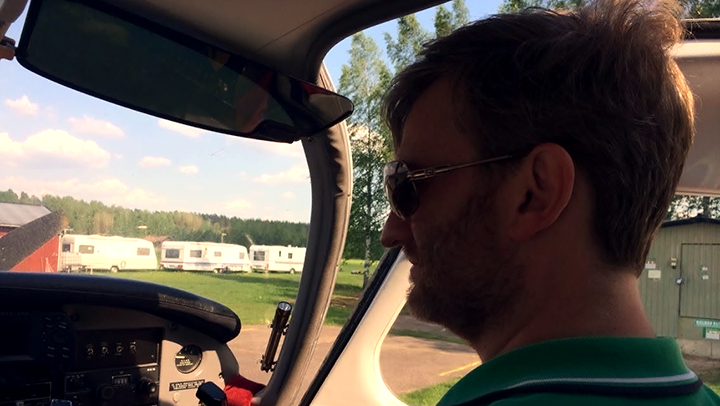
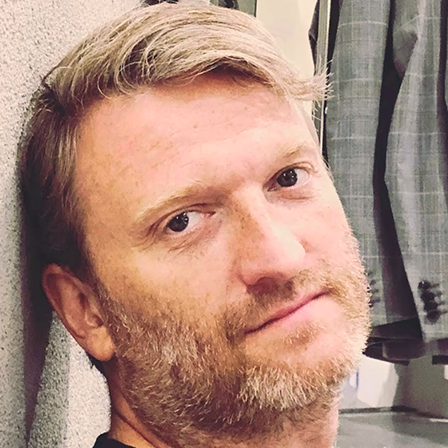
After 1993 Anders made no music for almost twenty years. Instead it was the guitar, steel-string and nylon-string alike, and a lot of parties. In the spring of 2000 he moved from Luleå to Solna to work as a programmer at Framtidsfabriken. At home in Solna he also had electronic drums, V-Drums, to play. His children were born in 2004 and 2006, and then he was mostly a dad. In 2008 he started a company together with Thomas Albertsson. When he took up music again, it was first in Cubase and later in Reason.
Between 2012 and 2021 he uploaded some thirty tracks to Looperman, of varying quality. The most commented on was 8 Bit World – Remix from 2014, a remix of Jeicee’s original, with 75 comments.
He found Jeicee’s track on Looperman and asked if he could put a lead on it – no problem, Jeicee replied. Anders remastered the track and added a kick drum, chords, bells and a sawtooth lead.
8 Bit World
/
”Well, what can I say, great job :D”
”This is the best 8bit chip tune i think i've ever heard.”
”I really never like 8-bit music till today my friend!!”
”It brings me back in time.”
He has also made music in the SunVox tracker; The Other Day from 2018 was his first track in it.

”this has a lovely 80s feel to it, well done man. great tune!”
”very relaxing track, love this pseudo retro-style with the guitar”
”It is a classic!”
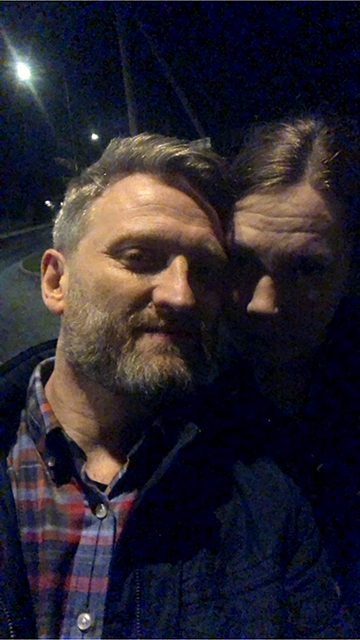
From the SID chip’s three voices to today’s digital studios, the tools have been swapped out many times over. To Anders, AI is the next step along the same road: one more instrument, from the same family as drum machines, sequencers and Auto-Tune. He started using Suno early, as far back as version 3.5.
But using AI does not have to mean typing “make a song about a frog dancing to disco”, pressing Enter and releasing whatever comes out.
As Suno could handle longer and longer context, he stopped letting it compose things he did not like. Instead he makes the foundation himself in Logic Pro and keeps it simple: bass and the midrange, a melody, simple chords, a simple bassline and drums. At that stage he puts no focus on the sound itself.
Then Suno gets to try out arrangements, instruments, vocals and production, and the mixing and mastering are done in Suno Studio. A song often goes back and forth between the tools several times, and sometimes back into Logic Pro for risers, effects and whatever else is missing. He turns his old creations into new music the same way.
The point is to get quickly from an idea to something you can listen to, judge and build on. Far from everything makes it all the way: roughly one in five new songs passes his own quality control and is finally released.
Melodies and harmonies have always been Anders’s strong suit. Mixing and mastering never appealed, though, and for a long time that was exactly where the songs got stuck; that work killed off most of what he made, even when the composition was finished.
Today he uses AI rather like a producer of his own, one who never gets tired: something to test ideas against and to hand parts of the production to. That is not so different from how a lot of commercial music is made, with songwriters, producers, musicians and engineers sharing the work.
The difference is that a hobby composer can now work in a similar way, without a record label paying for the studio.
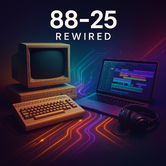
On 18 August 2025 the album 88–25: Rewired came out: 37 years of music, reimagined. It holds new versions of his old tunes, from the C64 years as well as from Looperman and SoundCloud – some with new names – in a mix of pop, R&B and instrumental parts. Fifteen of the 20 tracks have vocals and five are instrumental, and there is even a country song, Insuppressible. The album took about three months to finish. It is for everyone who has followed his music since 1988, and for those who have told him what the melodies have meant to them over the years.
Anders has also made his own versions of two songs that have stayed with him over the years: Driver’s Seat by Sniff ’n’ the Tears and Come Into My Life, inspired by The Navigators’ take on the Joyce Sims classic. Both came out as singles in February 2026.
The songs belong to different musical worlds, but they have something in common: strong ideas that need no needless complication. That is something Anders has always valued in music.
What has always fascinated Anders about Driver’s Seat is how simple it really is.
A guitar riff that sticks at once, a steady drive and an arrangement that grows through the song. The guitars get more and more room, with solos and melodic touches that build on the core idea without losing its simplicity.
That is exactly the kind of songwriting he likes. You do not need lots of advanced chord changes or complicated arrangements to make something that works. Sometimes a really good riff is enough, as long as you know what to do with it.
Come Into My Life appeals to a quite different side of his taste. Joyce Sims’s original from the 80s has a character all its own, not least thanks to her iconic voice. But it was above all The Navigators’ version that made Anders want to make one of his own.
What caught him was how the song’s harmonies move between minor and major. That mix of melancholy and warmth, where music can feel wistful and uplifting at the same time, has always drawn him in.
In his version he changed the rhythm a little and gave the song a partly different expression, but kept the harmonic feel that hooked him in the first place.
Rather unexpectedly, the version has found its audience mainly in the USA, and the listening seems to follow the seasons, with more interest in the summer half of the year. Why Americans, and why in summer? Anders has not worked that out yet.
Work on both songs did not start in Suno but with the original recordings. Anders separated the instrument and vocal parts and turned some of the material into MIDI. From that he could rebuild the songs’ structure, make his own changes and build simpler arrangements, which then became the starting point for the production in Suno.
It was a way of getting close to music he had admired for many years: taking it apart, understanding how it works and building it up again in his own voice. It is the same curiosity he had in his youth, but today’s technology makes it possible to study and experiment with the parts of a song in a completely different way.
AI is a hotly debated subject in the music business, and Anders thinks one thing is often forgotten: no musician has found their voice entirely alone. Everyone has been shaped by the music they grew up with and by the artists and producers they admired. For him it was Desmond Child’s productions, on repeat.
He sees a parallel with today’s AI, but it is only a parallel. An AI model does not learn the way a person does, and the questions of copyright and payment are far from settled. Still, the comparison raises questions about how we think of inspiration, learning and creativity.
Technology has also long made parts of the work easier. Drum machines, virtual instruments and advanced music software are a given in many productions, and some of that software is already written with the help of AI, without the musicians who use it knowing.
So he finds it a little odd when the debate is about which tools a musician uses rather than what actually gets made. At the same time, there is a difference between letting an AI make a whole song from a short description and using the technology to develop your own compositions. Both ways exist, but they do not take the same creative effort.
Anders has no great wish to tell others how to make their music. He has his hands full with his own.
New technology has never been a threat to his creativity. On the contrary, time and again it has made it possible to realise ideas that used to be hard or impossible. Whether someone else writes their song on a guitar, an analogue synth or with generative AI makes no difference to his own joy in composing.
He makes music as a hobby, mostly for his own sake, with no plans to become the next big artist. But it is certainly fun when someone listens, just as it was when that letter from Israel turned up in the letterbox in Luleå.
The technology has changed. The joy of making music has not. And perhaps that is where more of the energy belongs: in the making, rather than in keeping an eye on which tools other people use.
The music is released through DistroKid under the name Elmén Records, the name Anders chose for his own releases.
The music has also carried on in the family. His son makes hardstyle under the name vxcelm, has released music on NoCopyrightSounds and in November 2026 had just over 125,000 monthly listeners on Spotify.